
The Religious Impulse.
Observations on the theological component of the Resistance.
Ely Tahan
6/26/20266 min read
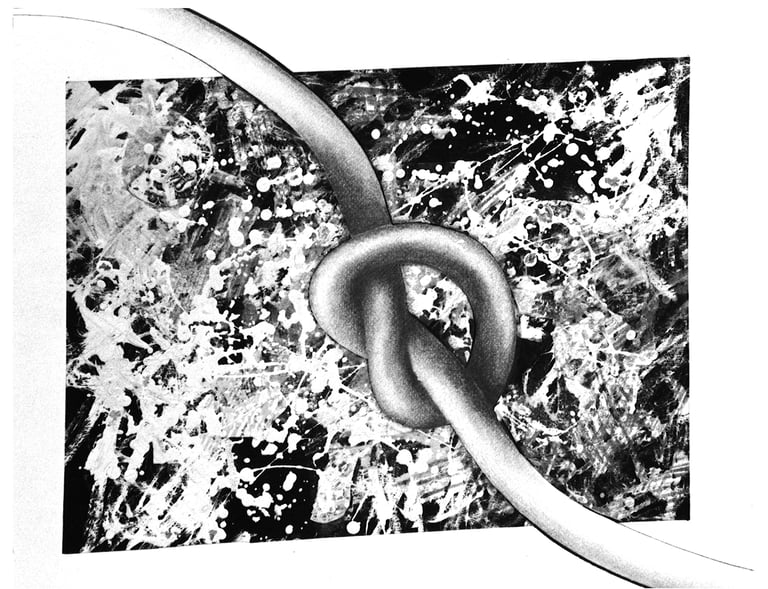
Considering the concrete counter-measures to the colonial forces in West Asia, secular forms of activism, although instrumental to social change, play a secondary role to the resolute determination and effectiveness of religious factions, namely the Shiite mobilization in Iran and armed struggle in Lebanon against a clearly defined enemy. Religion, the first impulse and last resort of the devout, the opium of the people, said to provide temporary relief rather than to solve root problems, brings faith to the front ranks of the struggle and drives its successes on the battle ground. But both because Islam has been consistently vilified by the West, and secular movements systematically decimated for the sake of Israel’s self-esteem, the religious resistance has promptly been codified as terrorist, entailing the charges of irrational, fanatical and hostile. There is however, a discrepancy between the abilities of the cultural intelligentsia and the razor-edged efficiency of Hamas or Hezbollah in responding to the virulence of Israeli occupation. The question goes further than positing the primacy of armed struggle over non-violent activism to land on a fundamental issue: Why is religion the backbone of the only capable army and not a laic democracy? And why is it currently the driving force of guerilla warfare and not a secular uprising? While Yemen, Iran and the resistance groups in the levant rightfully command the awe and respect of secular sectors because of their bravery and uncompromised stance, the theological element is mostly dismissed as circumstantial, evading the thorny issue of fideism.
It is clear from the onset that the resistance is itself confronted with an ecumenical persuasion currently on steroids. The toxic mix of Christian and Jewish Zionism is barely concealed by the shining image of democracy and civilizational superiority that rides an extremely aggressive industrial military complex. For all the socio-economic reasons and territorial concerns that fuel the US-Israeli alliance, the religious component of its guiding ideology is a pole of racist supremacy. Under the guise of freedom and fair representation is an inveterate sense of superiority, a stubborn remnant of the providential intervention that singles out a chosen people above all others and privileges its lineage. Compared to the tenets of Islam, and the Shiite faith in particular, the doctrines that subtend the coalition at the helm of the civilizational enterprise, are exceptionalist through and through. The legacy of Imam Hussain, by sharp contrast stands for moral justice, intrepid courage and self-sacrifice. Ashura, the corner-stone of spiritual and political resistance, integrates morality in the very structure of power, not as a mere quality but an active component that breaks with the symmetrical requisites of brute force. This major difference leads us to consider the structural mechanism of faith in order to get a better understanding of how belief aligns with its political practice. All systems of knowledge – assuming we do not polarize science and religion – can be conceived as articulating a dynamic of part-to-whole, the confluence of diversity and unity in the mystery of the one and the many. The cohesion of distinct components in how living entities are organized and how they address their environment is a configuration that is at the core of the human religious impulse, and the foundation of its connection with a deity. There is however, an ontological divide that separates “La ilaha illalah” from “E pluribus unum.” If they both revolve around the formal structure of unity, the qualitative difference could not be greater and points to divergent evolutionary paths. The well documented course of Western metaphysics is marked by its overcoming of religious dogma for the rational gains of science and reason. Thus, the breaking into parts of observable phenomena and the eventual erosion of the unitary paradigm, transferring it to abstract epistemological categories, such as the sublime, with art at its champion, and on an economic level, to a currency, turning the hitherto singular object of human volition into a manufactured commodity. Another salient characteristic of the western cultural enterprise is the fracture that entrenches ethics and politics into separate domains, as in non-communicating vases, held in an arrangement that promotes their self-referentiality and severance. For the Shia on the other hand, the Battle of Karbala is a timeless reminder to actively resist oppression, stand up for the truth, and fight for righteousness over falsehood. Through a long historical lens, it is possible to infer that Islam is immanent to the Judeo-Christian tradition but that the theological and cultural separatism of the latter chose to remain transcendent to it. Islam’s earthly deference, an approach ridiculed as submissive prostration has been vilified by medieval Europe ever since it launched its plundering crusades, snubbing its contribution for bridging the individual and the collective, which eventually resulted in the perverse absorption of the latter by the former, ushering the rise of individuality that reaches its end-logic with the cult of personality and its poison ingredient, hubris.
Returning to armed conflict and why it is currently sustained by a specific religious determination, it becomes clear that the indivisibility of ethics and politics is a salient factor that acts in favor of its straightforward deployment, promoting the semantic responsibility of binding word to action, a measure of transparency the other camp seems incapable of. Also evident is that this principle of unity suffers no loss of integrity, and that contrary to its disparagement by an ego, it is not personal glory but the community that is the ultimate destination of the shaheed. The horizontal deference to a deity is in stark contrast to Ayn Rand’s towering biped who stands tall above the societal looters and moochers of the world. Through these contrasting instances, the part-to-whole, individual-to-collective, mortal-to-deity relationship articulates a principle that is not reserved to any particular group but immanent to each and every creature and constitutes its unique, entitative condition.
In contrast to the armed struggle on the ground, the public movements critical of empire stand behind the glass wall of civic obedience. Save for radical groups such as Palestine Action, whose support has been pronounced illegal in England. The outspoken face draconian backlash and repression in most affluent countries of the world. Other movements such as the flotilla in the Mediterranean, seek to establish a corridor of humanitarian aid to Gaza while being consistently rebuffed by the Israeli forces. UN rapporteur Francesca Albanese who exposed the financial institutions supporting the ongoing genocide, is punished by being deprived of fiscal autonomy. The invisible fence behind which an informed public remains captive, demarcates the new barbarians at the gates, the farmers come freedom fighters who are flatly labeled terrorist. Despite the generalized repression, digital interfaces are able to breach through and display the reality on the ground, as in John Elmer’s weekly resistance report which meticulously chronicles the battlefield successes of Hamas and Hezbollah. For most viewers, the video recordings by the fighters themselves, of missile or drone enemy targets and the additional documentation of their destruction in reconnaissance footage, is an unfettered way of acceding the plane from which the armed resistance is disseminating its significant successes, meeting halfway on a common ground that has been split into sides by the same principle of neutralization that results from the segregation of ethics and politics. Herein, yet another subdivision affects moral law and adopts the part-to-whole dynamic by polarizing virtue ethics and deontology. The former the Aristotelian ideal of personal betterment and the later the Kantian observance of universal rules. A dualism resolved, or absolved depending on their level of contamination, by utilitarianism, Bentham’s version of the end justifying the means. In this consequentialist arena, individuals and institutions are also grafted on the molar to molecular repartition, and while those institutions are housed in larger organizations, they do not observe the mystery of the one and the many but rigidify in a two-headed redundancy that on the one hand, imposes statistical generalizations on singularities and on the other, raises a particular individual to the status of a godhead. And it is thus that the ideal of democracy slips into a euphemism for totalitarian despotism.
Al Ghazali’s metaphor of the impossibility of fire burning cotton without the intervention of God establishes the currency that upholds the part to whole relationship, echoed in the West by Malebranche’s Occasionalist attempts to apply a corrective to Descartes’ reductive rationalism. It is god that intervenes between two irreducible entities and causes their outcome, acting as a medium of exchange, not unlike the way Descartes replaced faith with a detached relativity that becomes the arbiter of phenomena. Only for capital and the commodity to eventually become the legal tender between the mind and the body. Divine intervention as the necessary condition for any part-to-part or part-to-whole relationship suggests that the real economy of being runs through the continuous concurrence of a force that is invested in each element involved and causes their interaction. La ilaha illalah.
These observations, while far from providing ready answers to a phenomenon that needs to be understood on its own ground, are an attempt to delineate an area of investigation meant to broaden the mutual engagement of the individual and the collective, and in so doing, bring down the defensive wall that currently separates a politics of truth from a politics of power.
Explore the artworks
of Ely Tahan on social media:
CONTACT
© 2025. All rights reserved.